 All-in-one solution
 Customer centric
 Pricing Expertise
 Pricing FAQ
 Success Stories
 Content HUB



How Are Retailers Managing Their Prices in 2026? – PricingHUB & Diamart Groupe Study

📌 TL;DR
- 72% of retailers view pricing as a strategic priority for 2026.
- AI is becoming an indispensable tool for pricing teams looking to implement an automated pricing strategy.
- Three key priorities this year: agile organization, predictive AI at the heart of the strategy, and powerful tools.
- aaS solutions like PricingHUB are gaining ground in dynamic price management.
Discover the full study results below ⬇️
After two years marked by inflation, retailers are gradually emerging from the pressure and beginning to rethink their pricing strategies from a new perspective.
Long focused on defensive adjustments to rising costs, pricing is now part of a more structured approach, integrating customer perception, competitive pressure, and long-term profitability challenges.
The objective for 2026: to enter a new phase where every pricing decision becomes a strategic lever driving commercial performance and differentiation.
Once again this year, the retail consulting firm Diamart Group joins forces with PricingHUB to launch an exclusive study on pricing management, conducted among French retail decision-makers.
Our goal? To decode the key trends and priorities in pricing!
And this year, our study highlights a clear shift: pricing is no longer just a defensive lever — it is becoming a true performance driver.
The conclusion is clear: nearly 72% of retailers now consider pricing a strategic priority, a 10% increase compared to last year.
Pricing has become central… but is still underutilized
Over the past two years, results have remained relatively stable and show that retailers are investing heavily in tools. While nearly 100% of retailers now claim to have a market data collection tool, almost 30% still have not invested in a dedicated pricing solution.
On paper, the foundation is there. In operational reality, a gap remains: pricing is still too often treated as an isolated technical exercise, rather than a business lever capable of centralizing market data, consumer price sensitivity, and performance objectives.
This disconnect limits retailers’ ability to adjust prices strategically and consistently, often leading to missed value creation opportunities and reduced competitiveness.
Expectations vs. reality: where does pricing make a difference?
In 2026, one of the most structuring aspects of the study is understanding where an optimized pricing strategy can truly make an impact.
First, in the calculation of price elasticity — a key area for ensuring prices align with demand and enabling a truly data-driven strategy. While 83% of retailers recognize the importance of consumer price sensitivity, only 11% actually integrate it into their practices. Moreover, nearly ¾ of retailers lack tools capable of incorporating elasticity into their strategy.
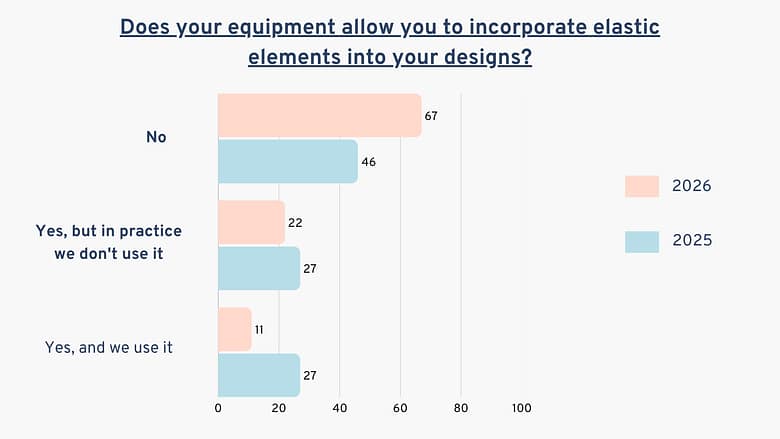
This reveals a simple but critical reality: the intent is there, but retailers still struggle to align their ambitions with operational execution. This year, equipping themselves with a solution like PricingHUB to properly integrate consumer price sensitivity is becoming essential to maintain profitability.
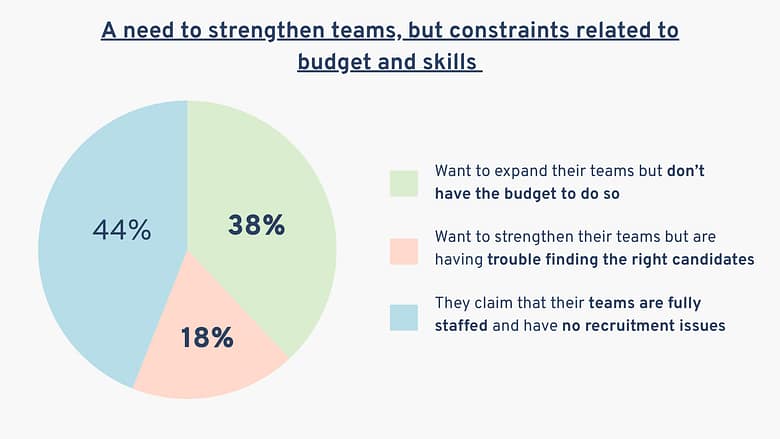
But tools alone are not enough. A structured team fully aligned around shared objectives remains essential. 56% of retailers understand this and aim to strengthen their teams, although 38% report lacking the necessary budget.
As for AI, expectations are high across several areas: matching, impact simulation, elasticity calculation — but its widespread adoption is still limited by cost.
In other words, retailers want to invest more to turn pricing into a competitive lever. Yet too few are willing to unlock the budget and resources required to turn this ambition into concrete results.
Hybrid AI: the new frontier of pricing
Among the most anticipated use cases in pricing management this year is scenario simulation powered by AI.
Why?
- To allow retailers to anticipate the impact of price changes
- To calculate thousands of elasticities in record time
- To optimize decision-making overall and by segment
- To enable the management of a truly data-driven strategy
How? In 2026, it is no longer about automation — it is about simulation.
Combining the speed and accuracy of AI with pricing expertise and field knowledge from your teams. We are now entering the era of hybrid AI.
Monitoring competitors… but beware of the data trap
Another key insight from the study: the race for data is reaching its limits. Monitoring competitors is essential — monitoring ALL competitors is impossible (and unnecessary).
A paradox is emerging: retailers are locking themselves into a “data bubble” fueled by continuous data collection. This creates an illusion of control, while overshadowing the true competitive advantage: the ability to react.
While 94% of retailers collect competitive data, the real question is: how many are actually able to leverage this data in their pricing strategies?
Yet in 2026, nearly one in two retailers still performs product matching manually, without proper tools. Retailers are collecting more and more competitor prices and signals without the real ability to activate them. The result is clear: all acknowledge that their product matching and assortment alignment capabilities are incomplete.
Product matching is now becoming a structuring lever in pricing. It is increasingly driven by AI, capable of automatically identifying equivalent products across retailers, even when product labels differ.
With PricingHUB, artificial intelligence goes beyond data collection — it ensures automatic matching. Our goal? To help you leverage highly targeted insights, refine your analyses, and drive faster, more reliable decisions.
Monitoring competitors… but beware of the data trap
What this edition clearly shows: retail pricing is entering a phase of maturity.
The question is no longer whether to invest in pricing. The real question becomes: How can these investments be transformed into concrete, value-creating decisions?
Simply put, in 2026 retailers can rely on three key pillars to make a difference with their pricing strategy:
- Generative and predictive AI to simulate complex scenarios
● The industrialization of elasticity calculations to delegate complexity to AI and free up pricing teams’ time
● An agile organization equipped with the right tools to automate execution, allowing teams to focus on what truly matters: strategy
PricingHUB is your all-in-one SaaS platform designed to turn retail complexity into a powerful growth lever. By going beyond the limits of manual processes, we enable retailers to automate AI-driven, consumer-centric pricing decisions.
Our goal? To make pricing smarter, more professional, and more profitable through our forward-looking approach to price optimization.
➡️ Want to learn more about pricing trends in 2025 and how PricingHUB can help?
📩 Access the full 2026 study here and discover our innovative Saas solution !
For an overview of pricing trends over the past two years, check out our 2025 study here